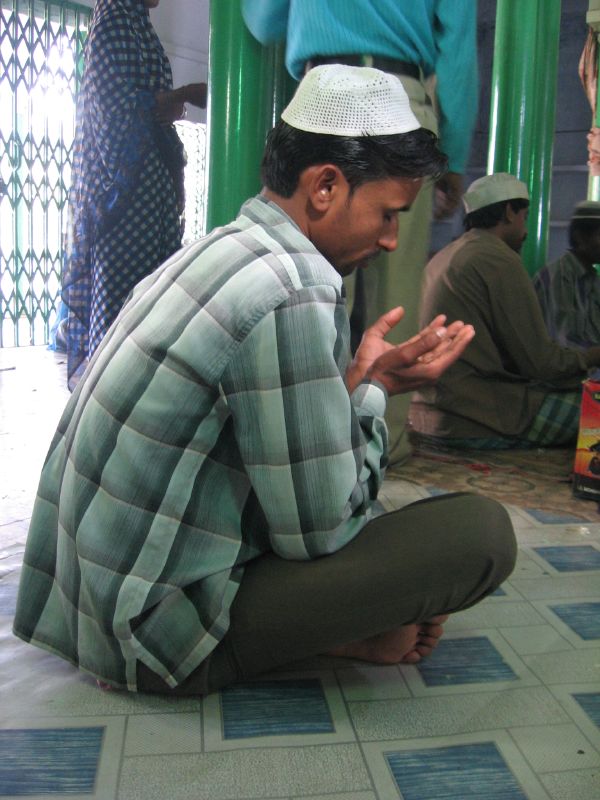
Talbiyah is a pledge to answer Allah's call. Understand its meaning, wording, and when to start and stop reciting it in umrah and hajj.
Talbiyah is the phrase called out by umrah and hajj pilgrims as a sign of answering Allah's call to perform hajj or umrah. Its well-known wording is: "Labbayk Allahumma labbayk, labbayka la sharika laka labbayk, inna al-hamda wan-ni'mata laka wal-mulk, la sharika lak." It means roughly: "Here I am, O Allah, here I am. Here I am; You have no partner; here I am. Truly all praise, favour, and dominion are Yours; You have no partner."
The meaning of talbiyah is profound. This phrase is a declaration of a servant's readiness to submit and obey Allah's command. Within it lies an affirmation of tawhid, namely that Allah alone deserves worship and has no partner. Talbiyah also contains praise, acknowledgement of every blessing, and recognition that all dominion of the heavens and the earth belongs to Allah alone. By uttering it, pilgrims realise how small they are before the majesty of the Creator.
Talbiyah begins to be recited when pilgrims enter ihram and make the intention for umrah or hajj at the miqat. From that moment a person formally enters the state of ihram with all its restrictions. Talbiyah is then repeated throughout the journey: when boarding and alighting from vehicles, upon meeting other groups, in the morning and evening, and whenever one remembers Allah.
For umrah, talbiyah continues to be recited until pilgrims reach Masjid al-Haram and are about to begin tawaf. When they start to touch or gesture towards the Black Stone at the beginning of tawaf, the recitation of talbiyah stops. In hajj, talbiyah is recited longer, generally until the stoning of Jamrat al-Aqabah on the day of sacrifice.
Some etiquette is recommended in reciting talbiyah. For men, it is recommended to raise the voice when saying it, while women recite quietly, just audible to themselves. Say it with full reflection, not as mere memorisation slipping off the tongue. Feel that you are answering Allah's call from a faraway place, with a heart full of hope and love.
Talbiyah is not merely an administrative requirement of worship, but the spirit that accompanies a servant's journey to the House of Allah. By understanding its meaning and the times for reciting it, pilgrims can experience each call of talbiyah as a pledge of obedience that renews the intention and strengthens devotion throughout umrah and hajj.
Increasing talbiyah is one sign of a pilgrim's earnestness. Scholars mention that raising the voice with talbiyah for men is among the recommended rites of hajj and umrah, as a form of magnifying Allah and encouraging fellow pilgrims.
After reciting talbiyah, it is also prescribed to send blessings upon the Prophet (peace be upon him), then to ask Allah for His pleasure and His paradise, and to seek refuge from the Fire. Thus talbiyah does not stand alone, but is joined with supplication and blessings that perfect one's servitude.
For Indonesian pilgrims whose everyday language is not Arabic, it is highly recommended to learn the wording and meaning of talbiyah from home through manasik training. By understanding its meaning, each time talbiyah is called out, the heart is present, truly feeling that it is answering Allah's call. This is what makes the journey of umrah and hajj not merely a series of movements, but a spiritual journey that transforms and improves the self.